
Long life
Rated for 2,000 cycles with proper use — up to 10 years of service, depending on how often you use it.
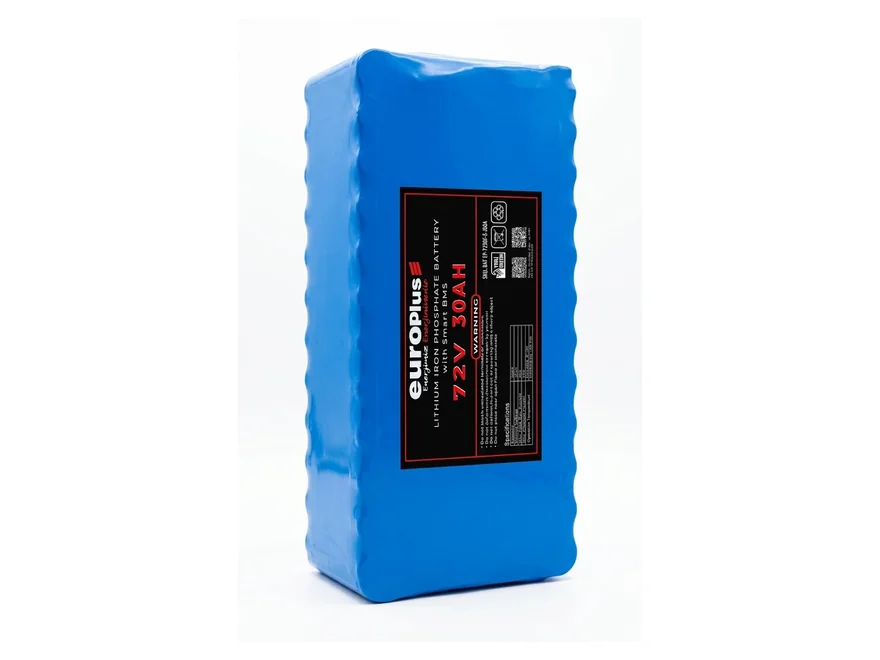
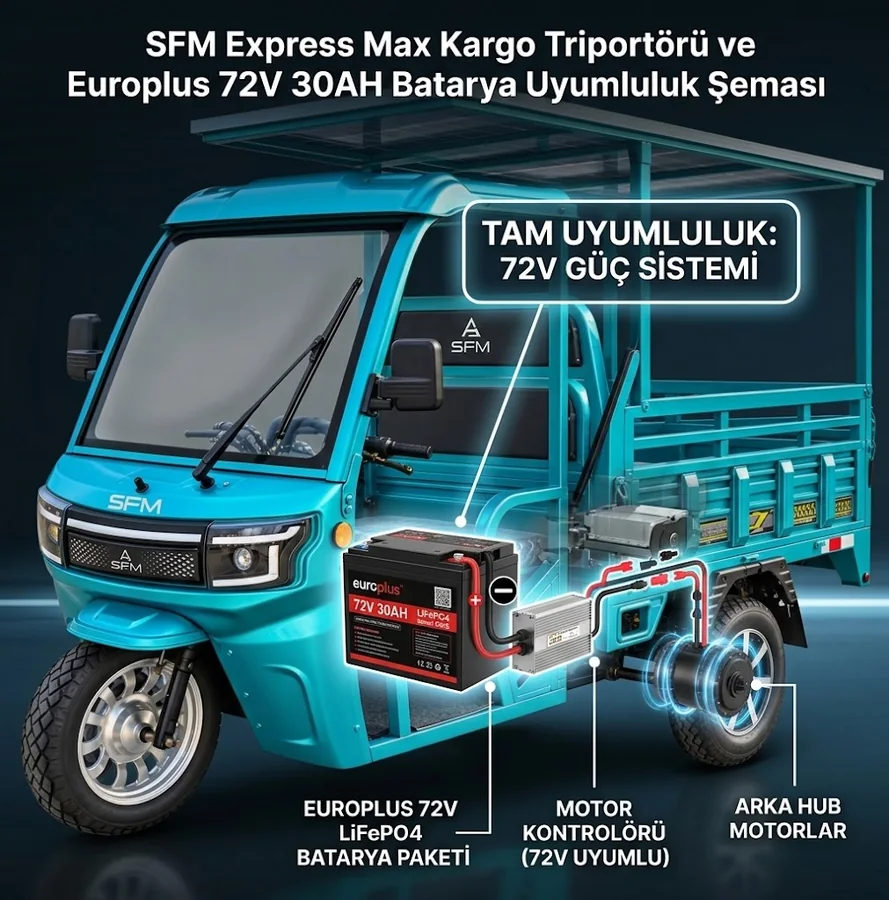
A LiFePO₄ traction battery that drops in where your e-trike's gel pack was. Lighter, far longer-lived and steady in voltage as it drains — the motor does not lose power as the pack empties.
₺28.500 ≈ $569
Price includes VAT.
💰 By bank transfer: ₺27.650
💳 Up to 12 monthly instalments by card (interest applies) — chosen on the payment page
🚚 Shipping paid by the buyer — to the courier on delivery · 2–5 working days
Most e-trikes ship with a gel or flooded lead-acid battery pack. Those types are cheap but heavy, lose capacity within a few hundred cycles, and their voltage sags past the halfway point, so the vehicle noticeably loses power.
LiFePO₄ (lithium iron phosphate) chemistry solves all three: it carries the same energy in a body up to 3 times lighter than gel batteries, lasts 2,000 cycles with proper use, and holds its voltage steady while discharging — the motor does not lose power as the pack empties.
This 24S pack gives 30 Ah at 76.8 V nominal (24 cells × 3.2 V) — about 2,300 Wh of energy. It carries a balancing BMS (battery management system) inside: it keeps the cells even and protects against overcharge, over-discharge and short circuit.
The charger is not included. A suitable one is a LiFePO₄-compatible CC/CV type. The maximum charge voltage is 87.6 V: the safe charge limit of a LiFePO₄ cell is 3.65 V, and 24 cells × 3.65 V = 87.6 V. The recommended charge current is 6–10 A; the highest charge current the battery accepts is 30 A. Charge between 0 °C and 45 °C. The old charger you used for a gel battery will not charge this pack correctly.
| Nominal voltage | 76.8 V (72 V class · 24 × 3.2 V) |
| Capacity | 30 Ah |
| Energy | About 2,300 Wh |
| Cell configuration | 24S |
| Chemistry | LiFePO₄ (lithium iron phosphate) |
| Maximum charge voltage | 87.6 V (24 × 3.65 V) |
| Maximum charge current | 30 A |
| Charging temperature | 0 °C to 45 °C |
| Discharge cut-off voltage | About 54 V |
| Protection | Built-in balancing BMS |
| Cycle life | 2,000 cycles with proper use |
| Outer dimensions | About 41 × 16 × 17 cm |
| Charger (not included) | LiFePO₄-compatible CC/CV · 87.6 V · 6–10 A |
The values come from manufacturer and supplier information; the outer dimensions were measured on the pack.
What do LiFePO₄, BMS and cycle life mean? Solar Glossary →
It drops into the same 72 V system in place of the gel pack; the difference shows in lifespan, weight and how the vehicle feels to ride.
Rated for 2,000 cycles with proper use — up to 10 years of service, depending on how often you use it.
Up to 3 times lighter than gel batteries and takes up less space — less dead weight to haul around.
A 10 A fast charger fills it completely in 3–4 hours.
You use the full capacity without losing power; the voltage stays steady throughout the discharge, so it performs strongly on hills.
LiFePO₄ is far more thermally stable than other lithium-ion chemistries such as NMC; the risk of fire and explosion is markedly lower.
Charging before it is empty, or unplugging before it is full, does not shorten its life.
Thanks to its long life it works out cheaper than gel batteries in the long run.
Take a look at our ready-made sets for charging a 72 V pack straight from a panel.
Yes — on 72 V systems it goes in where the gel or lead-acid pack was. The charger must be LiFePO₄-compatible (CC/CV, 87.6 V); an old gel charger will not charge this pack correctly.
The pack measures about 41 × 16 × 17 cm. Before ordering, compare this with the inside dimensions of your vehicle's battery compartment. If you are unsure, send us the compartment measurements via WhatsApp and we will check them together.
Range depends on the vehicle's motor power, load, tyre pressure and road gradient, so we do not quote a figure in kilometres. The one certain number is the energy: 76.8 V × 30 Ah ≈ 2,300 Wh. If you know your vehicle's consumption we can work it out together.
No — the battery is sold on its own. A suitable charger is a LiFePO₄-compatible CC/CV type: charge voltage 87.6 V, recommended charge current 6–10 A, and the highest charge current the battery accepts is 30 A. We can check your existing charger together before you order.
With a 10 A fast charger it is fully charged in 3–4 hours. Charge at an ambient temperature between 0 °C and 45 °C; a LiFePO₄ battery must not be charged below 0 °C.
No. LiFePO₄ batteries have no memory effect; charging before the battery is empty, or unplugging before it is full, does not shorten its life.
With proper use it is rated for 2,000 cycles. Depending on how often you use it, that means up to 10 years of service — many times the typical life of a gel battery.
LiFePO₄ is far more thermally stable than other lithium-ion chemistries such as NMC; the risk of fire and explosion is markedly lower. The built-in BMS protects against overcharge, over-discharge and short circuit. Even so, use only a LiFePO₄-compatible charger, and do not puncture or crush the battery or bring it near an open flame.
Yes. For charging a 72 V pack straight from a panel we use the BOOST MPPT 24–72 V charge controller; it is also in our ready-made e-trike solar sets.
We also source batteries for 24, 36, 48 and 60 V systems — write to us for stock and pricing.
No published reviews for this product yet. If you bought it, write about your experience; it is published here after approval.
Message us on WhatsApp for stock and delivery; we reply the same day.